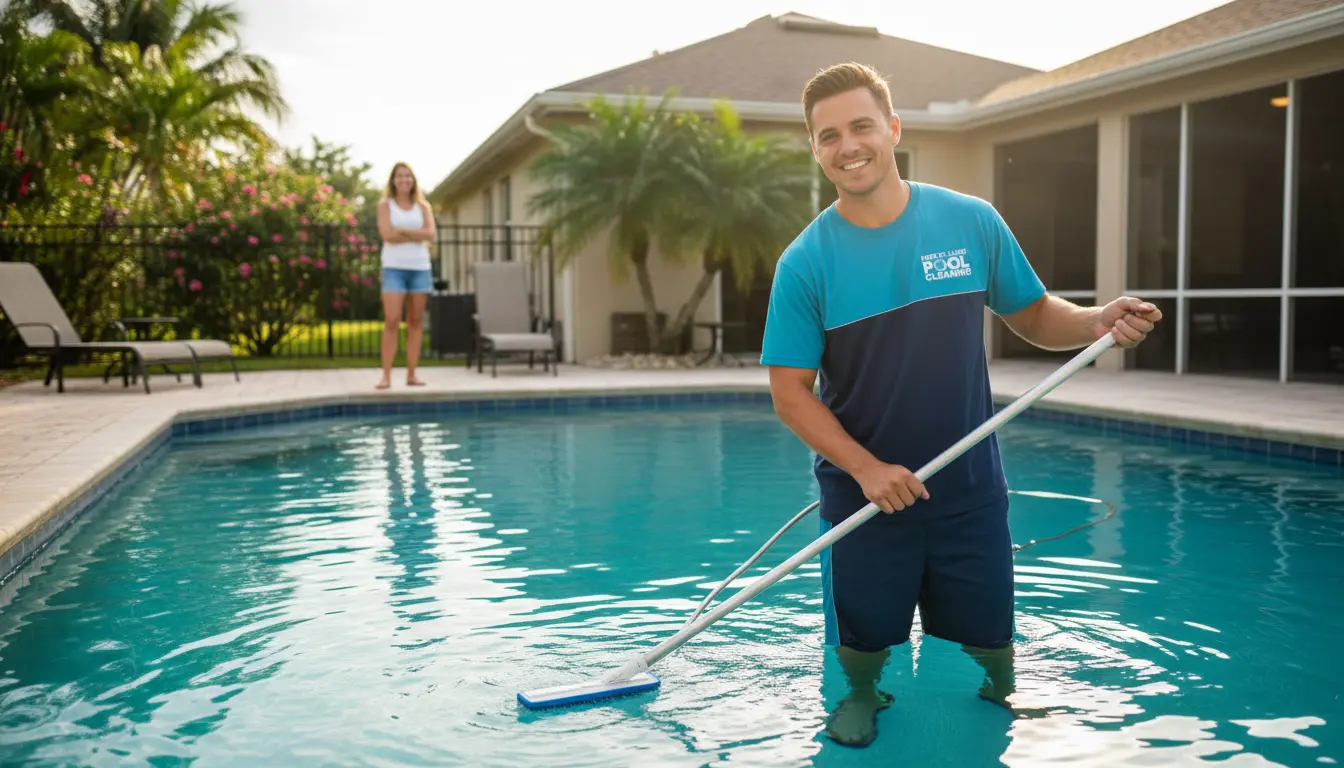
Algae prevention in pool maintenance refers to the process of preventing the growth of algae in swimming pools, which is crucial for maintaining clean and safe water. It is often confused with algae removal, which is the process of eliminating existing algae growth. However, prevention is key to avoiding the costly and time-consuming process of removal. In Port St Lucie, Florida, the warm and humid climate creates an ideal environment for algae growth, making prevention a top priority for pool owners.
The city’s subtropical climate, characterized by intense summer heat and frequent afternoon rainstorms, can lead to rapid changes in water chemistry, creating an environment conducive to algae growth. Furthermore, the high UV index in the area can cause chlorine degradation, reducing its effectiveness in preventing algae. As a result, professional pool maintenance is critical in Port St Lucie to ensure the longevity of pool equipment and the health and safety of swimmers.
Port St Lucie Pool Cleaning is the premier service provider in the area, offering expert pool maintenance services to homeowners. With years of experience and a team of certified professionals, the company provides comprehensive pool cleaning services, including water testing, surface skimming, wall and tile brushing, vacuuming, filter backwashing and cleaning, and precise chemical dosing. By partnering with Port St Lucie Pool Cleaning, homeowners can ensure their pools remain clean, safe, and well-maintained throughout the year.
Technical Process
The professional pool cleaning workflow involves a series of steps designed to maintain optimal water chemistry and prevent algae growth. The process begins with comprehensive water testing, which involves analyzing the water’s pH, total alkalinity, calcium hardness, and free available chlorine levels. This information is used to determine the necessary chemical adjustments to maintain a stable and balanced water chemistry.
Surface skimming and wall and tile brushing are also crucial steps in the process, as they help remove debris and contaminants that can contribute to algae growth. Vacuuming is also essential, as it helps remove dirt and debris from the pool floor and walls. Filter backwashing and cleaning are also necessary to ensure the filter is functioning properly and removing contaminants from the water.
In addition to these steps, precise chemical dosing is critical to maintaining optimal water chemistry. This involves adding the necessary chemicals to the water to maintain a stable pH, total alkalinity, and free available chlorine levels. The use of digital photometers and commercial-grade telescopic poles also helps ensure accurate and efficient chemical application.
Data Comparison Table
The following table compares the benefits of regular professional maintenance versus DIY pool cleaning:
| Feature/Metric | Regular Professional Maintenance | DIY Pool Cleaning |
|---|---|---|
| Chemical Accuracy | Highly accurate chemical application | Potential for inaccurate chemical application |
| Time Investment | Minimal time investment required | Significant time investment required |
| Long-term Equipment Health | Improved equipment longevity | Potential for reduced equipment longevity |
Source: PHTA Recreational Water Quality Guide
Expert Insights
One advanced professional tip for preventing algae growth is to balance cyanuric acid levels in the water. Cyanuric acid helps stabilize chlorine and prevent its degradation due to sunlight. However, excessive levels can lead to chlorine lock, reducing its effectiveness. By maintaining optimal cyanuric acid levels, pool owners can ensure their chlorine is working effectively to prevent algae growth.
Another common mistake homeowners make is shocking the pool during peak sunlight. This can lead to rapid chlorine degradation and reduce its effectiveness in preventing algae growth. Instead, pool owners should shock the pool during the evening or at night when the sun is not present.
Ignoring calcium hardness levels is also a common mistake. Low calcium hardness levels can lead to plaster etching and equipment corrosion, while high levels can cause scaling and equipment damage. By maintaining optimal calcium hardness levels, pool owners can ensure the longevity of their equipment and the health and safety of swimmers.
Pricing
The cost of professional pool maintenance services can vary depending on several factors, including pool size, local vegetation and debris load, and the presence of a screen enclosure or lanai. The following are some general pricing structures for pool maintenance services:
- Weekly maintenance rates: $100-$300 per month
- Monthly maintenance rates: $300-$600 per month
- Chemical-only service: $50-$100 per month
- Fixed rates for specific services: $200-$500 per service
Factors that influence cost include pool size, local vegetation and debris load, and the presence of a screen enclosure or lanai. For example, larger pools require more chemicals and equipment, increasing the cost of maintenance. Similarly, pools with heavy local vegetation and debris load require more frequent cleaning, increasing the cost of maintenance.
Safety and Standards
Port St Lucie Pool Cleaning adheres to strict safety protocols and standards, including the use of EPA-registered sanitizers and proper chemical storage. The company’s certified professionals are trained to handle chemicals safely and efficiently, minimizing the risk of accidents and ensuring a safe swimming environment for households with children and pets.
The company also references specific certifications, such as PHTA/CPO – Certified Pool Operator, to ensure that its professionals are knowledgeable and skilled in pool maintenance and safety protocols. By partnering with Port St Lucie Pool Cleaning, homeowners can trust that their pools are being maintained to the highest standards of safety and quality.
FAQ Section
What is the importance of balancing cyanuric acid levels in pool water?
Balancing cyanuric acid levels is crucial for preventing algae growth and ensuring the effectiveness of chlorine in the water. Cyanuric acid helps stabilize chlorine and prevent its degradation due to sunlight. However, excessive levels can lead to chlorine lock, reducing its effectiveness. By maintaining optimal cyanuric acid levels, pool owners can ensure their chlorine is working effectively to prevent algae growth.
How often should I shock my pool?
The frequency of shocking the pool depends on several factors, including pool usage, water chemistry, and local environmental conditions. As a general rule, pools should be shocked every 1-2 weeks during peak usage periods and every 2-4 weeks during off-peak periods. However, it’s essential to consult with a professional pool maintenance service to determine the best shocking schedule for your specific pool.
What are the consequences of ignoring calcium hardness levels in pool water?
Ignoring calcium hardness levels can lead to several consequences, including plaster etching, equipment corrosion, and scaling. Low calcium hardness levels can cause plaster etching, which can lead to equipment damage and reduce the longevity of the pool. High calcium hardness levels can cause scaling, which can lead to equipment damage and reduce the efficiency of the pool’s filtration system.
How can I prevent algae growth in my pool?
Preventing algae growth requires a combination of regular maintenance, proper water chemistry, and effective sanitation. Regular maintenance involves cleaning the pool and its equipment, testing and adjusting the water chemistry, and sanitizing the pool with chlorine or other disinfectants. Proper water chemistry involves maintaining optimal levels of pH, total alkalinity, calcium hardness, and free available chlorine. Effective sanitation involves using EPA-registered sanitizers and following proper safety protocols.
Professional Pool Care in Port St Lucie
Maintaining a clean and safe swimming pool requires regular professional maintenance. By partnering with Port St Lucie Pool Cleaning, homeowners can ensure their pools remain clean, safe, and well-maintained throughout the year. The company’s certified professionals are trained to handle all aspects of pool maintenance, from water testing and chemical application to equipment repair and replacement.
For homeowners in Port St Lucie, maintaining a clean and safe swimming pool is crucial for the health and safety of their families. By investing in regular professional maintenance, homeowners can ensure their pools remain a source of enjoyment and relaxation for years to come. Contact Port St Lucie Pool Cleaning today to schedule your pool maintenance service and experience the benefits of a clean and safe swimming pool.