Living in Florida means endless sunny days and backyard pools that become the heart of summer fun. But with the state’s intense humidity, frequent rain, and warm temperatures, maintaining a pool can be a challenge—especially if you’re aiming for an eco-friendly approach. As residents of Port St. Lucie know, our pools aren’t just for swimming; they’re part of our lifestyle. At Port St Lucie Pool Cleaning, we specialize in sustainable pool care that keeps your water sparkling without harming the environment. In this guide, we’ll explore practical, green tips to help you reduce chemical use, conserve resources, and enjoy a healthier pool. Whether you’re in the bustling community of River Park or the serene Torres Pines, these strategies will make a difference.
Understanding Florida’s Unique Pool Challenges
Florida’s subtropical climate presents specific hurdles for pool owners. High humidity levels promote algae growth, while heavy rainfall can dilute chemicals and introduce debris. In Port St. Lucie, where afternoon thunderstorms are common, pools face constant exposure to leaves, pollen, and even saltwater spray from nearby coastal areas like Port Salerno.
Battling Humidity and Algae Growth
The warm, moist air in our region creates ideal conditions for algae to thrive. Traditional chlorine-heavy treatments can work, but they often lead to over-chlorination, which harms beneficial bacteria in the soil and waterways. Instead, focus on prevention. Regularly skim the surface to remove organic matter before it decomposes and fuels algae blooms. For Port St. Lucie homes in areas like Cedars Of St. Lucie, where lush vegetation surrounds many backyards, this daily ritual can prevent issues before they start.
Consider integrating natural filters, such as zeolite or activated carbon, which trap impurities without relying solely on harsh chemicals. These eco-friendly alternatives reduce the need for frequent chemical balance adjustments, promoting a more balanced ecosystem in your pool.
Chlorine vs. Saltwater Systems: A Greener Choice?
Many Florida pool owners debate between traditional chlorine and saltwater systems. Saltwater pools generate chlorine through electrolysis, using less store-bought chemicals overall. However, the initial setup requires careful pH level testing to ensure efficiency. In humid Port St. Lucie, saltwater systems shine because they minimize evaporation losses and require fewer additives. If you’re switching, consult professionals to avoid salt buildup that could affect local groundwater.
Eco-Friendly Maintenance Tips for Everyday Care
Sustainable pool care isn’t about cutting corners—it’s about smart choices that save money, time, and the planet. Here are actionable steps tailored for Florida’s demanding environment.
Using Natural Cleaning Agents
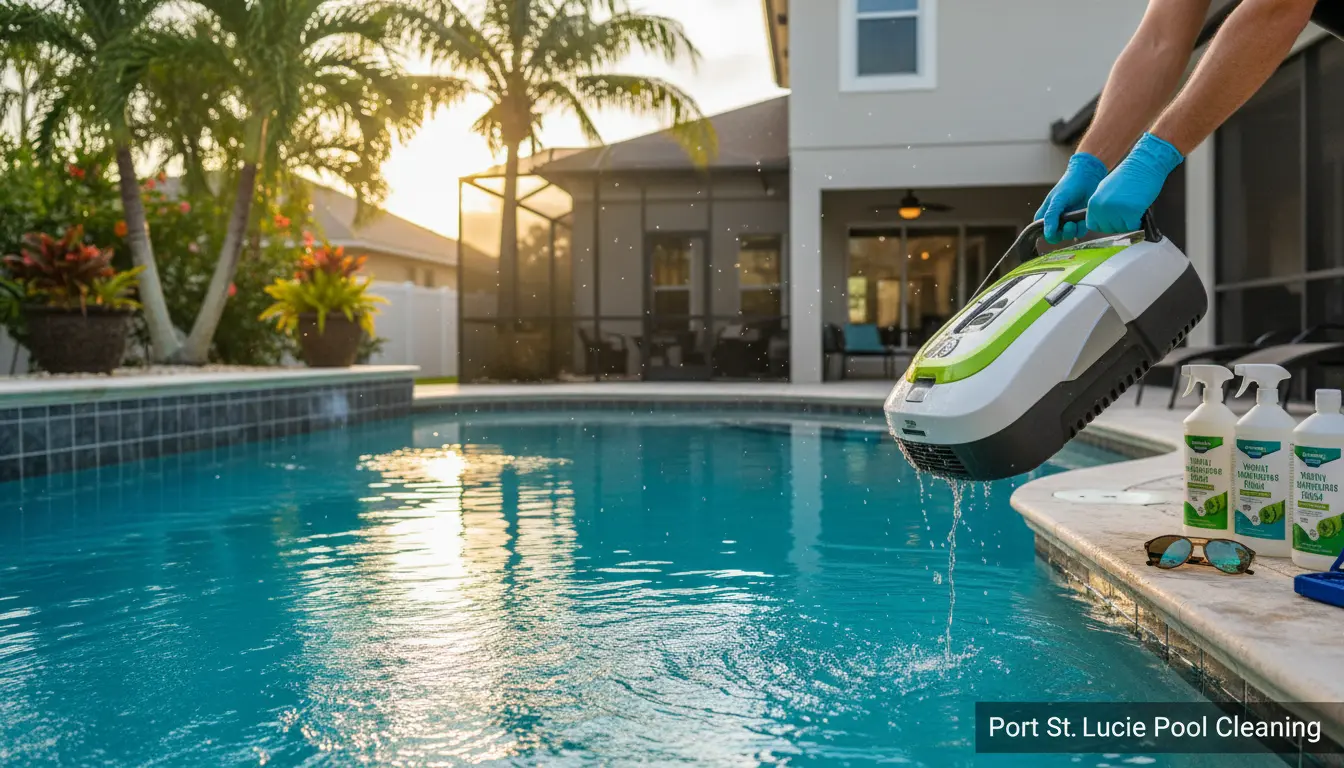
Ditch the synthetic algaecides and opt for enzyme-based cleaners derived from natural sources like citrus extracts or beneficial bacteria. These break down organic waste without leaving toxic residues. For instance, apply a weekly dose of natural enzymes after skimming to keep water clear. In Port St. Lucie, where pool parties are a weekend staple, this approach ensures safe, chemical-free swims for families in neighborhoods like Palm City.
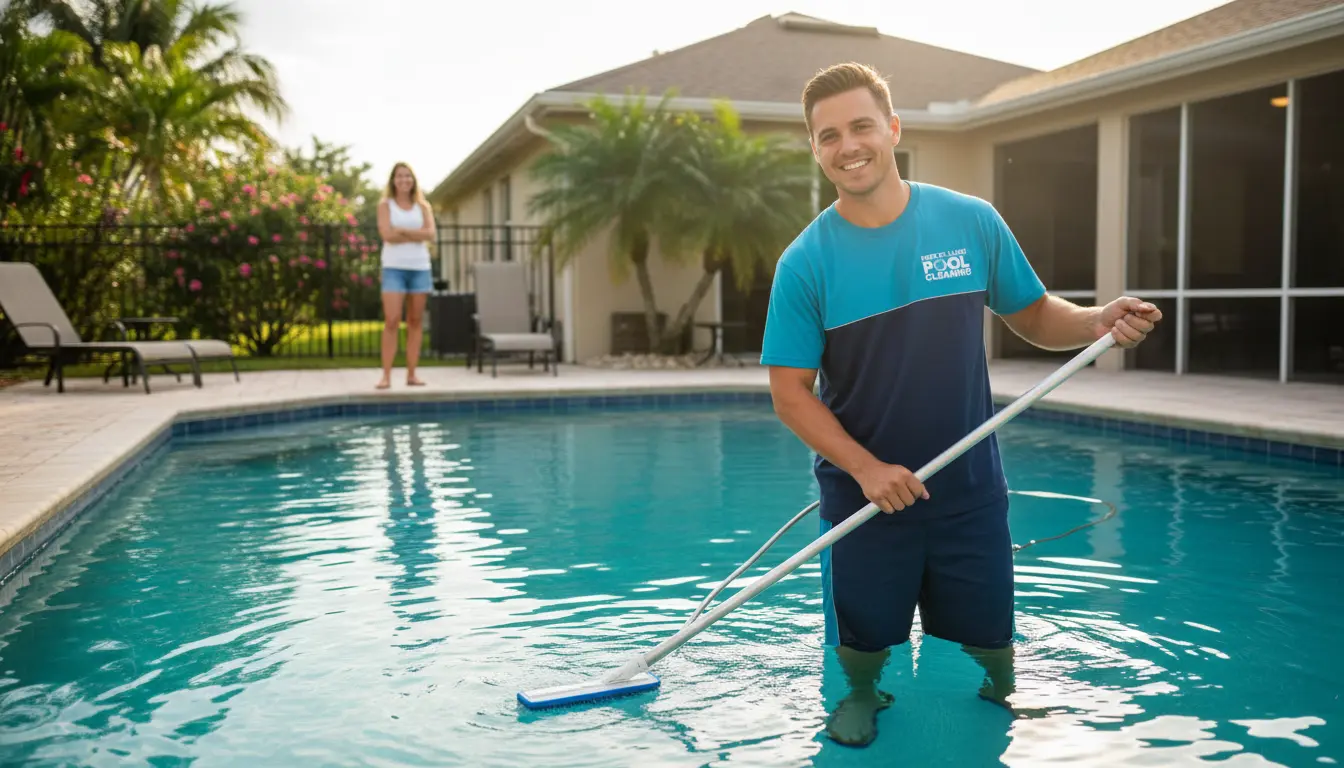
Pair this with manual brushing using soft-bristle tools to avoid damaging pool surfaces. Avoid power washing, which can erode liners and introduce microplastics into the ecosystem. If debris is overwhelming, our weekly pool cleaning services in areas like Torres Pines can handle the heavy lifting while adhering to green standards.
Water Conservation Strategies
Water is precious in Florida, especially during dry spells that follow rainy seasons. Reduce refill needs by covering your pool when not in use—this cuts evaporation by up to 90% in our hot climate. Install a pool cover that doubles as a solar blanket to heat the water naturally, decreasing reliance on gas heaters.
Backwashing filters less frequently by choosing high-efficiency cartridge filters over sand ones. These trap more dirt with less water waste. For Port St. Lucie residents in flood-prone spots like River Park, monitor rainfall and adjust water levels proactively to avoid overflows that strain local drainage systems.
Energy-Efficient Equipment Upgrades
Upgrade to variable-speed pumps, which use up to 80% less energy than single-speed models. In Florida’s year-round pool season, this switch pays off quickly on utility bills. LED lighting for nighttime swims not only saves power but also reduces light pollution affecting local wildlife.
Solar-powered heaters are another win for eco-conscious owners. They harness Florida’s abundant sunshine to maintain comfortable temperatures without fossil fuels. If you’re preparing for the cooler months, think ahead to spring pool opening services that incorporate these upgrades seamlessly.
Seasonal Eco-Friendly Pool Care in Port St. Lucie
Our local weather demands a year-round strategy. Summers bring intense heat and storms, while winters, though mild, can see cooler nights.
Summer Prep: Heat and Storm Resilience
As temperatures climb in Port St. Lucie, increase circulation to prevent stagnant hotspots. Run your pump during peak sun hours to distribute heat evenly. After storms, test for pH shifts caused by rainwater. Communities like Port Salerno, close to the water, often deal with extra salinity—rinse decks before sweeping to keep it out of the pool.
Incorporate native plants around your pool area to naturally filter runoff. This not only beautifies your space but supports local biodiversity.
Winter Maintenance: Mild but Mindful
Even in Florida’s gentle winters, pools need attention to avoid stagnation. Lower the water level slightly to account for less evaporation and cover during chilly evenings. Use windbreaks like hedges in exposed areas such as Cedars Of St. Lucie to minimize debris.
For off-season care, consider fall pool closing if you’re traveling, ensuring everything is balanced and covered to prevent winter algae.
FAQ: Common Questions on Eco-Friendly Pool Care
What are the best natural alternatives to chlorine for Florida pools?
Enzyme treatments and saltwater systems are excellent chlorine reducers. They maintain sanitation while being gentler on skin and the environment. Always balance with regular testing.
How often should I perform maintenance in Port St. Lucie’s humid climate?
Weekly skimming and bi-weekly chemical checks are ideal. For professional help, schedule monthly visits to stay ahead of algae and imbalances.
Can eco-friendly care save me money in the long run?
Absolutely—energy-efficient pumps and natural cleaners cut costs by 20-50%. Plus, fewer repairs from chemical damage add up.
Is it safe to swim right after using natural cleaners?
Yes, most enzyme-based products are swim-ready within 15 minutes, unlike harsh chemicals that require hours.
How does Port St. Lucie Pool Cleaning ensure green practices?
We use biodegradable products, minimize water waste, and train staff on sustainable methods tailored to local conditions.
Conclusion: Dive into Sustainable Pool Ownership Today
Embracing eco-friendly pool care in Florida isn’t just responsible—it’s rewarding. From battling humidity in Port St. Lucie to conserving water amid our rainy seasons, these tips empower you to enjoy a pristine pool guilt-free. At Port St Lucie Pool Cleaning, we’re committed to helping residents in areas like Palm City and beyond achieve that balance. Ready to make your pool greener? Contact us today for a free consultation and let’s keep your oasis sustainable and splash-ready all year long.